

Key takeaways
- Match the lot number on the vial to the lot number on the certificate before logging the material.
- Treat a purity figure as incomplete unless it names its method, such as ≥99% by HPLC.
- Read HPLC purity and mass spectrometry identity together, not as alternatives.
- Use the milligram figure in the product name as net content; courier shipping weight includes packaging and desiccant.
- File one certificate per lot, even when two lots of the same peptide report the same purity.
What the certificate records
A certificate of analysis is a single-page record that states what a lot contains, how much, how pure it measured and by which method. It is tied to one lot of one product, not to the product line as a whole.
Every lot in our Research Peptides catalogue ships with a downloadable certificate of analysis. The document is read from the top down: identity first, then quantity, then analytical data, then the lot number that links the paper to the vial in hand. Each field answers one question. Read together, the fields let a purchasing officer confirm that the material received matches the material ordered.
Field 1: product identity
The identity block names the peptide. Where applicable it also carries a molecular formula, a molecular weight and a CAS number.
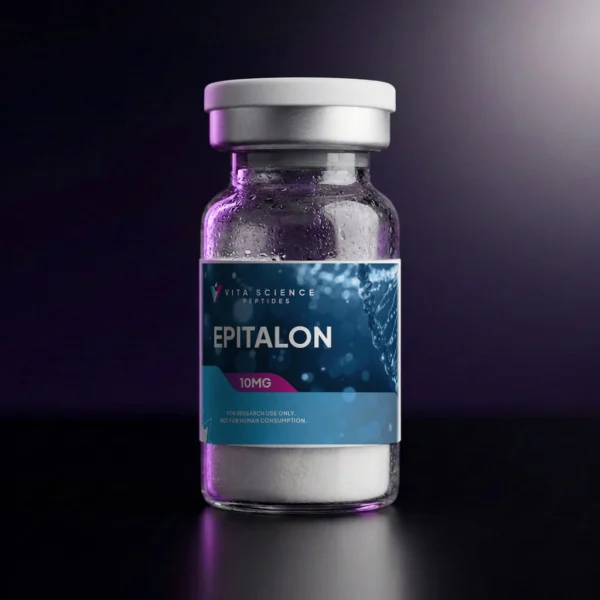
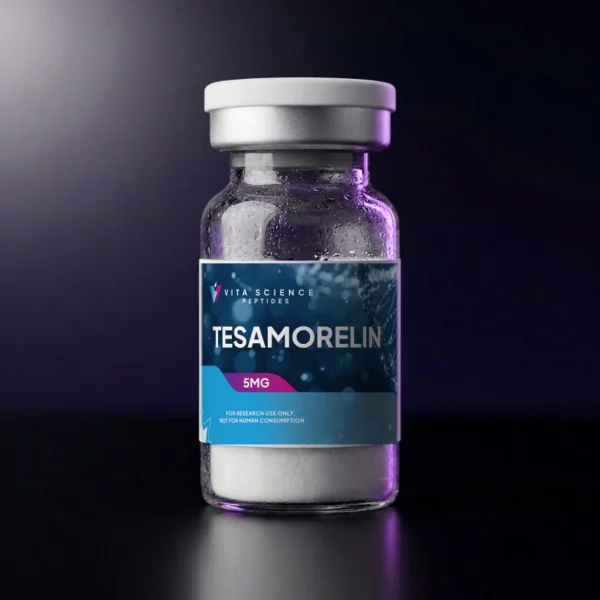
Identity should be checked against the purchase order before the vial is logged. Naming conventions vary between suppliers and between literature sources, so a synonym on the certificate is not an error in itself. For example, Epitalon is also written as Epithalon in published work; the vial we list as Epitalon Tetrapeptide, 10 mg Lyophilized Vial is the same tetrapeptide under either spelling. Class descriptors appear here as well. Tesamorelin is recorded as a GHRH analogue, which tells the reader what family of sequence is in the vial.
Field 2: purity and appearance
Purity is a number paired with a method. On our certificates it reads ≥99% by HPLC.
Three related entries sit in this part of the document:
- HPLC purity — the percentage of the main peak relative to total peak area, reported as ≥99% by HPLC.
- Observed mass — the mass measured by mass spectrometry, compared against the calculated mass for the stated sequence.
- Appearance — the physical state of the material, recorded as lyophilized powder.
A purity figure without a method is not usable information. A figure of 99% by HPLC and a figure of 99% by a different technique are not interchangeable, because each technique responds to different impurities. If a certificate states a percentage and no method, treat the field as incomplete.
Appearance matters at intake. Lyophilized powder that has visibly changed state should be recorded in the receiving log with the lot number, since the certificate describes the material as it was released.
Field 3: test method
The method field states how the analysis was performed. Ours names third-party HPLC and mass spectrometry.
High-performance liquid chromatography separates the sample and quantifies the main component against everything else in the chromatogram. That produces the purity percentage. Mass spectrometry verifies the molecular identity of the sequence. It compares the measured mass against the mass calculated from the stated sequence.
Both are needed. HPLC alone shows that a sample is largely one compound without confirming which compound. Mass spectrometry alone confirms identity without quantifying what else is present. Read the two fields as a pair.
Third-party testing means the analysis was carried out outside our own facility. The certificate records the method for each lot, so a reviewer can see whether the lot in hand was assessed the same way as a prior lot.
Field 4: lot number and quantity
The lot number is the field that connects the document to the physical vial. It should appear on the certificate and on the vial label, and the two must match character for character.
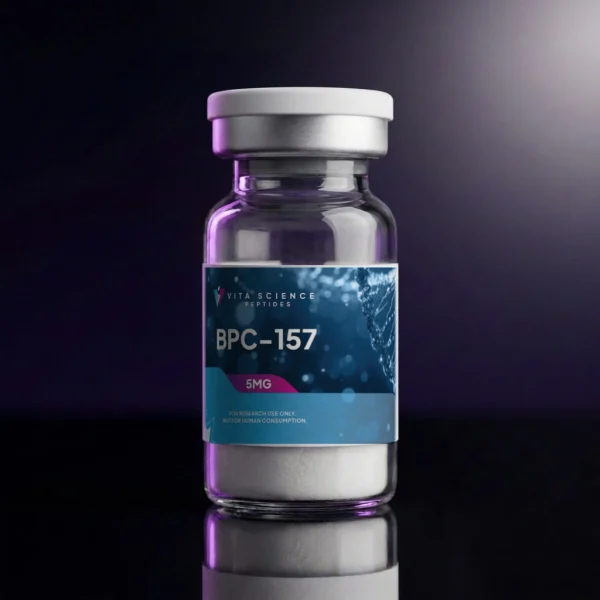
Quantity is stated as net peptide content per vial. Our listings use 5 mg and 10 mg formats, so BPC-157 Lyophilized Peptide is 5 mg per vial and the Epitalon vial is 10 mg per vial. Do not read the shipping weight from a courier label as net content. Shipping weight covers the vial, the cold-chain packaging and the desiccant, and for our single-vial shipments that packed weight is 0.05 kg in an 8×8×6 cm carton.
A practical intake sequence:
- Match the lot number on the vial to the lot number on the certificate.
- Confirm the peptide name and the milligram figure against the purchase order.
- Record purity and method as stated, for instance ≥99% by HPLC.
- File the certificate against the internal lot record before the vial enters storage.
Field 5: storage and packaging notes
The storage statement describes conditions for the lyophilized material. Lyophilized peptides are held cold and dry, away from light and moisture.
Packaging supports that statement in transit. Each vial travels in cold-chain packaging with desiccant, shipped tracked from Vancouver. Desiccant addresses moisture uptake, which is the practical concern with a hygroscopic lyophilized powder. Sterile 10 mL glass vials and bacteriostatic water are listed separately under Lab Supplies for laboratories that maintain their own consumables inventory.
Storage conditions used in the receiving laboratory should be logged alongside the certificate. The certificate describes the lot at release; the internal log describes what happened afterwards.
Limitations of a Certificate of Analysis
A certificate of analysis is a record of measurement, not a statement of suitability for any given protocol. It does not specify experimental design, concentrations, buffers or endpoints. Those decisions belong to the principal investigator.
It also does not carry forward. A certificate applies to one lot only. When a second lot of the same product is ordered, a second certificate accompanies it, and the two should be filed separately even where the stated purity figures match. Lot-level documentation is what makes a result traceable back to a specific vial.
Ordering from us is limited to laboratories and qualified researchers. Certificates are downloadable per lot so that purchasing officers can attach them to procurement files.
For laboratory research use only. Not for human or veterinary use.