

Key takeaways
- Record lot number, purity with its test method, date received and storage location on the day the parcel is opened.
- Rename each certificate of analysis to a fixed pattern and cite that same string in the experiment record.
- Log lot numbers for consumables such as bacteriostatic water and sterile vials, not only for peptides.
- Track a retest or review date set by laboratory policy, alongside freeze-thaw and desiccant notes.
- Close the register line when a lot is exhausted and retain the archived certificate.
Linking a vial to its record
Traceability holds when three identifiers point to each other: the lot number printed on the vial label, the certificate of analysis filed for that lot, and the experiment record that cites both. The link is made at receiving, not at analysis, because the label is the only permanent connection between the physical vial and the paperwork.
Every lot we ship carries a downloadable certificate of analysis stating identity, purity and test method. That document is the anchor. An experiment record that names a peptide but not a lot cannot be reconciled later.
Data captured at receiving
Receiving is the shortest point of failure. A single line in the reagent register, written on the day the parcel is opened, removes most audit questions.
- Product identity and quantity — for example, 10 mg lyophilized powder per vial.
- Lot number — transcribed from the vial label, character for character.
- Purity and test method — recorded as stated, such as ≥99% by HPLC.
- Date received and the courier tracking number.
- Condition on arrival — cold-chain packaging intact, desiccant present.
- Storage location — freezer, shelf, box position.
When a shipment of TZ5 Acylated Peptide Analogue, 10 mg Lyophilized Vial arrives at $89.99 CAD per vial with a certificate of analysis for that lot, the register entry and the filed PDF are created in the same session. Splitting the two tasks across days is where lot numbers go missing.
Filing certificates so they are findable
A certificate of analysis stored under its download name is effectively lost. The purchaser renames the PDF to a fixed pattern and files it in one directory per reagent.
A workable naming pattern
- Peptide or reagent name, abbreviated consistently.
- Quantity per vial, in figures and units — 5 mg or 10 mg.
- Lot number, exactly as printed.
- Date received, in ISO order.
For example: TZ5_10mg_LOT-XXXX_2025-03-11.pdf. The same string is pasted into the experiment record and written on the storage box label. Three copies of one identifier, in three places an auditor will look.
Retest dates versus expiry
Lyophilized research peptides are commonly tracked by retest date rather than an expiry date. A retest date is the point at which the laboratory decides whether to re-verify identity and purity in house, or to retire the material from active protocols. The certificate of analysis records the state of the lot at the time of testing; it does not describe the vial after months in a shared freezer.
Practical handling in the register:
| Field | Source |
| Purity and test method | Certificate of analysis for the lot |
| Date received | Shipping record |
| Retest or review date | Set by the laboratory’s own policy |
| Storage condition since receipt | Freezer log |
Freeze-thaw events, time at room temperature and desiccant condition are worth logging beside the retest date. They explain, later, why a lot was retired early.
Consumables carry lots too
Audit findings often land on consumables rather than the peptide. Solvents, diluents and glassware move between benches and rarely get a register line.
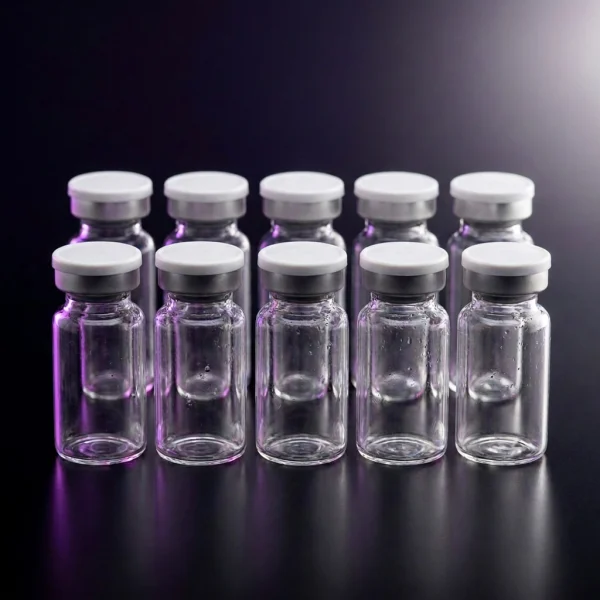
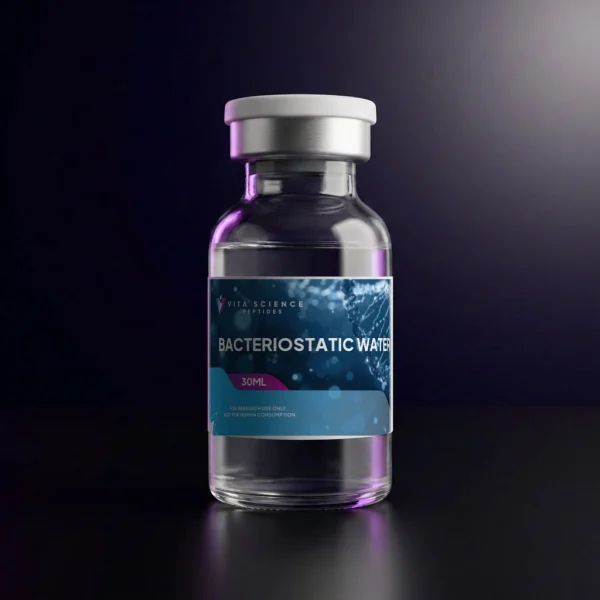
A 30 mL multi-dose glass vial of Sterile Bacteriostatic Water, preserved with 0.9% benzyl alcohol at $49.99 CAD, is a laboratory reagent and should be logged with its own lot number and date first opened. The same applies to the Sterile 10 mL Borosilicate Vials with Butyl Stoppers, packed ten per box at $24.99 CAD with crimp seals; the box lot is the traceable unit, and each vial drawn from it inherits that lot in the record.
Both items are sold for laboratory use only, as are all listings in /product-category/lab-supplies/.
Writing the experiment record
The experiment record is where traceability is proved. Naming a reagent by trade name alone is not sufficient for reconciliation.
- Reagent name, quantity per vial and supplier.
- Lot number for the peptide and for each consumable used.
- Purity with its test method, copied from the certificate of analysis.
- File reference for the archived PDF.
- Date the vial was first opened and the storage location it came from.
When a lot is exhausted, the register line is closed with the date and the PDF stays in the archive. A closed line with a retained certificate answers the question an auditor actually asks: which document described the material used on that day.
Ordering and documentation from Vancouver
We ship tracked from Vancouver in cold-chain packaging with desiccant. Every lot in /product-category/research-peptides/ ships with a downloadable certificate of analysis stating identity, purity and test method, and vials are supplied as lyophilized powder in 5 mg or 10 mg presentations depending on the listing.
Ordering is limited to laboratories and qualified researchers. Purchasing officers who need the certificate before a purchase order is raised can request the document for the lot on hand.
For laboratory research use only. Not for human or veterinary use.